
Last week Microsoft stood on stage at Build and did something its own customers had spent two years being told was irrational. It shipped its own frontier models. Seven of them. The flagship, MAI-Thinking-1, was trained from scratch with no distillation from another lab’s outputs, and Microsoft positioned the family squarely as a way to stop paying royalties to OpenAI and pass the savings to developers. Satya Nadella called it “a pretty significant shift.”
The frontier model is no longer the prize. The layer that decides which model runs, what it costs, and whether it can be trusted to act that is the prize.
Start with the cleanest evidence: the gap between which models win benchmarks and which models win tokens. By OpenRouter’s published rankings, Chinese-origin models now account for close to half of identified token volume on the platform, with DeepSeek alone near 17.6% and Xiaomi’s two MiMo coding models together carrying more than a fifth of all programming traffic. Meanwhile the models topping the intelligence leaderboards rank far down the usage charts. OpenRouter is now routing on the order of 100 trillion tokens a month and just raised $113 million on the back of that growth. Read those two facts together.
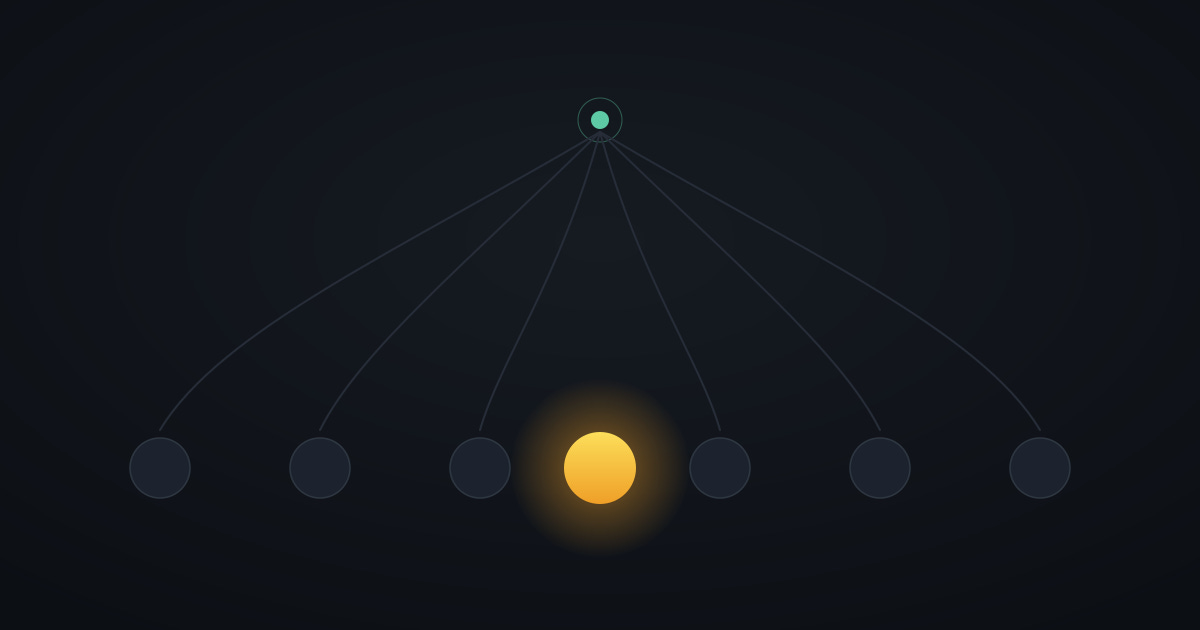
Developers are not buying the smartest model. They are buying the model that clears their quality bar at the lowest cost and a router is making that decision for them thousands of times a second.
This is what commoditization actually looks like. Not the disappearance of quality differences, but the moment quality stops being scarce enough to command a premium for routine work. When a model that is 90% as good costs a quarter as much, the 90% model wins the volume, and the volume is where the economics live.
Now look at the enterprise side,. The Ramp AI Index, which tracks real corporate-card and bill-pay spend across more than 50,000 American businesses, showed Anthropic passing OpenAI in paid business adoption for the first time: 34.4% of businesses to 32.3%, with overall AI adoption crossing 50%. A year earlier Anthropic sat around 9%. That is a genuine changing of the guard, and both TechCrunch and VentureBeat flagged the same fragility I keep coming back to. The lead is built on token-based pricing during a period of rising compute cost. The thing that drove the revenue is the thing that exposes it. The moment a buyer can route the easy 70% of calls to a cheaper model and reserve the premium model for the hard 30%, that adoption number becomes a spend-optimization target, not a moat.
You do not train seven models from scratch to win a benchmark. You do it to own the cost curve and remove a supplier’s pricing power over your entire platform. The under-discussed mechanism here is not model quality at all. It is that owning the model lets Microsoft set the default in Copilot, Azure, and the developer tools and the default is worth more than the benchmark. Whoever controls the routing surface controls the demand, and Microsoft just decided it would rather control that surface with its own silicon underneath than rent it.
Benchmark leadership and token leadership have come apart, and the gap between them is where the next battle of margins will be fought.
The capital is voting the same way. Crunchbase’s tally for the first week of June had spend-management platform Ramp raising $750 million at a $44 billion valuation, Supabase pulling $500 million for developer and AI-app infrastructure at $10.5 billion, and a new entrant called Flourish raising $500 million from Bezos, Lux, and Google Ventures to pursue brain-inspired architectures. Notice what is getting funded at the top of that list. Not a new model. The plumbing that sits above and below the model: cost control, developer infrastructure, and a bet on a different architecture entirely. The week before, Anthropic’s own raise dominated, and both Anthropic and OpenAI have now filed to go public. When the two defining labs file for IPO in the same fortnight, the era of the model as a pure research artifact is over. It is a business with public shareholders, quarterly cost discipline, and pressure to defend margin against exactly the commoditization I just described.
Maybe the frontier still matters more than anything, because the next capability jump ie real autonomous agents that complete multi-step work without a human in the loop will be so valuable that whoever ships it first takes the market regardless of cost. If that happens, routing to the cheap model is a false economy and the premium model wins everything.
Whether the future is cheap-model commoditization or expensive-agent autonomy, value accrues to the same place: the control plane that selects models, governs their cost, and contains their actions. The model is becoming an input. The orchestration is becoming the product.
The companies that win the next phase will not be the ones running the smartest model. They will be the ones who made the smartest model interchangeable. Build the layer that makes it so, and let everyone else keep racing for a lead that no longer pays.
Sources
Microsoft AI, Building a hill-climbing machine: Launching seven new MAI models — https://microsoft.ai/news/building-a-hillclimbing-machine-launching-seven-new-mai-models/
OpenRouter, Model Rankings — https://openrouter.ai/rankings
Ramp, Ramp AI Index — May 2026 (Ara Kharazian, May 13, 2026) — https://ramp.com/leading-indicators/ai-index-may-2026